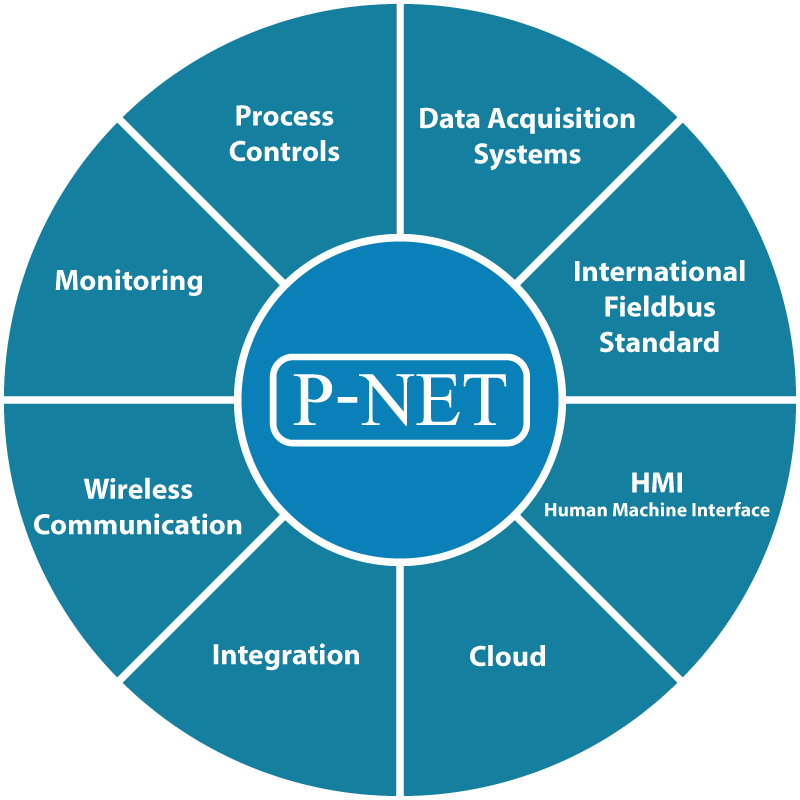
P-NET is a data communication standard, used for industrial automation and process control applications.
P-NET is part of the International Fieldbus Standard – IEC 61158 Type 4.
Features & advantages of P-NET
All nodes are adapted to the same profile
All nodes can communicate immediately on the network
Very few communication parameters, compared with other fieldbus systems
Any P-NET module, including a master, can be powered down or connected to or disconnected from the bus, without interfering with the rest of the bus system
No DIP switches for setting of node addresses etc.
The P-NET standard consists of data formats for simple as well as complex data types
Scaled values are transmitted in SI units on the bus
Conclusion: Very simple installation and commissioning
About the International P-NET User Organization
The International P-NET User Organization, founded by the pioneers in the P-NET Fieldbus area, is a forum for all P-NET users and producers, institutes, and other people interested in the P-NET Fieldbus.
The objects of the organization are:
to disseminate global information and knowledge of the P-NET standard and its application.
to contribute to the determination of technical specifications concerning future development of the P-NET standard.
to participate in fieldbus standardization on international level (IEC – International Electrotechnical Commision)
The official language in the International P-NET User Organization is English. All publications use English as the principal language.
Companies, institutions and individuals can become members of the Organization. Members are defined as being manufacturers, end-users or institutions.